West Haven vs. Milford: What the Price Gap Actually Measures
August 20, 2026
August 20, 2026
Open three tabs on West Haven and you will get three different stories about how fast homes sell there. One says under three weeks. Another says nearly two and a half months. Neither is wrong. They are measuring different moments in the same transaction, and the gap between them tells you more about how West Haven deals actually close than any single headline number does.
That distinction matters more than usual right now, because West Haven is one of the cheaper towns on this stretch of shoreline compared to Milford next door, and buyers keep asking us the same question: is that discount about location, or about something else entirely?
Zillow's tracker had West Haven homes moving to pending in around 20 days as of late February 2026. A Patch analysis of the same market in mid April 2026 put it even faster, around 17 days to pending. Meanwhile Redfin's numbers for February 2026 showed the median West Haven sale taking 75 days from list to close, up sharply from 46 days a year earlier, with only 24 homes selling that month versus 31 the year before.
Both sets of numbers can be true at once. Pending measures the moment an offer gets accepted. Closed measures the moment the deal actually records, after inspection, appraisal, and financing clear. In a town where a lot of the housing stock is older, that stretch between accepted offer and closed sale is where the friction lives. An offer gets accepted quickly because inventory is tight. What happens between acceptance and the closing table is a separate story, and in West Haven right now it is taking longer than it did a year ago.
For a cleaner read, it helps to compare both towns through the same source in the same month. Movoto's August 2026 snapshot does that:
| Metric (August 2026) | West Haven | Milford |
|---|---|---|
| Median list price | $359,000 | $550,000 |
| Price per square foot | $244 | $318 |
| Median days on market | 24 | 24 |
The pace is identical. Both towns are clearing listings in the same 24 days this month. What is not identical is what that 24 days is buying.
Divide list price by price per square foot and you get an implied average home size for each town. For West Haven in August 2026, that works out to roughly 1,470 square feet. That number is not a guess. It lines up almost exactly with the town's own measured average of 1,484 square feet, based on SmartMLS listing data compiled in early August 2026, well under the county average of 1,917 square feet.
Run the same division on Milford and the implied average climbs to roughly 1,730 square feet, closer to the county norm.
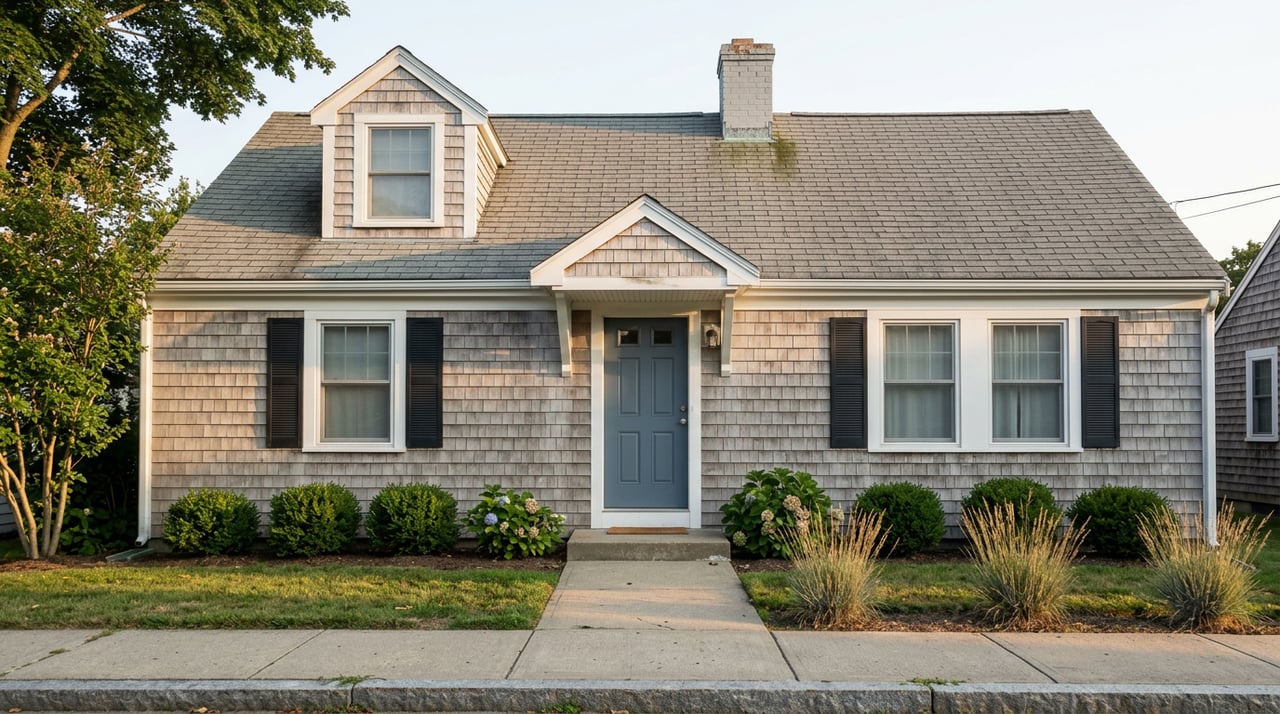
That gap in square footage explains a real chunk of the price gap between the two towns. On raw median price, West Haven runs about 35 percent cheaper than Milford this month. On price per square foot, the gap narrows to about 23 percent. The remaining 12 points are simply house size. West Haven's housing stock skews toward postwar capes and ranches, with nearly 38 percent of the town's homes built between the 1940s and the 1960s according to NeighborhoodScout's tally, plus another quarter of the stock built before 1939. Milford has more homes that match the county's larger, newer profile. A buyer comparing sticker prices between the two towns is partly comparing land value and partly comparing the era a house was framed in, and it is worth knowing which one you are actually paying for.
None of this accounts for what is happening on West Haven's own boardwalk, which is where the town's long term value case gets more interesting than a spreadsheet.
The old Savin Rock Conference Center at 6 Rock Street sat vacant for eight years after a series of stalled plans, including a brewery proposal that never got past legal appeals. Construction is now underway on The Kelsey at Savin Rock, a waterfront restaurant and event venue from RTR Hospitality Group, with an opening targeted for late 2026 or early spring 2027. It arrives just as Jimmies of Savin Rock, a family owned seafood spot that had served the shoreline since 1925, closed its doors in December 2025.
Mayor Dorinda Borer called the Savin Rock waterfront "our greatest asset" when the project broke ground, and the timing is not incidental. A vacant landmark reopening as a multi level dining and event space, with rooftop seating over the water, is the kind of visible reinvestment that tends to show up in a neighborhood's desirability well before it shows up in a median price chart.
There is a second, less visible signal pointing the same direction. On July 29, 2026, the Regional Plan Association released Homes on Track: Connecticut Part Two, a study of 63 rail and bus rapid transit stations statewide. The report named West Haven's station area, which sits in the Elm Street-Wagner Place neighborhood, among 19 stations identified as near-term opportunities for transit-oriented development, with 21 more flagged for the mid-term.
That designation matters because Connecticut just started implementing Public Act 25-1, known as Work Live Ride, which gives municipalities that establish qualifying transit-oriented districts priority access to state funding and technical assistance. CTDOT has also confirmed it is studying state-owned parking lots near several stations, West Haven included, for potential redevelopment, the same kind of process that is already bringing 470 new apartments to a mixed-use project at New Haven's Union Station, set to break ground in late 2026.
None of this means West Haven's train station area is about to look different next year. Near-term in a planning document usually means years, not months. But it does mean the town's station area, its walk to Campbell Avenue's international dining strip, and its proximity to the University of New Haven are on the state's radar in a way Milford's station currently is not, at least according to this particular report.
A few things worth carrying into your own search:
Compare price per square foot before you compare median price. The headline gap between West Haven and Milford looks larger than the real value gap once you account for home size.
Expect the closing timeline, not the pending timeline, to be the number that matters. If a lender or inspector flags something on an older cape or ranch, plan for it to add weeks, not days.
Watch the waterfront and the station area separately from the rest of town. Reinvestment tends to be uneven. A restaurant reopening at Savin Rock and a transit study naming Elm Street-Wagner Place do not raise every block in West Haven at the same rate.
Do not read too much into a single month's median price swing in either town. Milford's Q1 2026 transaction count dropped 64 percent year over year according to PropertyShark, and Redfin logged a 20 percent price drop for March 2026 alone compared to the year before. With only 30 to 50 sales in a given month, one cluster of smaller or larger homes selling can swing the median without reflecting any real change in value. Zillow's own index, updated as of late May 2026, told a calmer story over the same broader window, up 6.6 percent for the year. Both can be accurate. Neither should be read alone.
Is West Haven a good long-term hold compared to Milford? NeighborhoodScout's ten-year data puts West Haven's cumulative appreciation at 103.38 percent, ranking in the top 40 percent of markets nationally, though the most recent year trailed the broader national pace. That is a longer runway than any single month's numbers can tell you.
Should I wait for the transit-oriented development to happen before buying near the station? The RPA report treats West Haven's station area as a near to mid-term opportunity, which in planning terms usually spans several years before zoning or construction changes are visible on the ground. Waiting on a timeline that long rarely makes sense for a household ready to move now.
Does West Haven's older housing stock mean more repairs? With close to 62 percent of the town's homes built before 1970, inspections tend to surface more items on postwar capes and ranches than on newer construction. That is not a reason to avoid the town, but it is a reason to budget time and a contingency for what an inspection might turn up, and to talk through financing options with your lender before you write an offer.
If you are trying to figure out whether West Haven's number or Milford's number actually fits what you need, that is exactly the kind of comparison The Hill Team walks through with buyers every week. Reach out for a free home valuation and we will help you read the numbers for what they actually say, not just what they look like on a portal.
Stay up to date on the latest real estate trends.

Choosing the right real estate team makes all the difference. We combine in-depth market knowledge, strategic marketing, skilled negotiation, and personalized service to ensure every client experiences a seamless and successful journey from consultation to closing. Your goals become our mission, and we work relentlessly to exceed expectations at every stage.