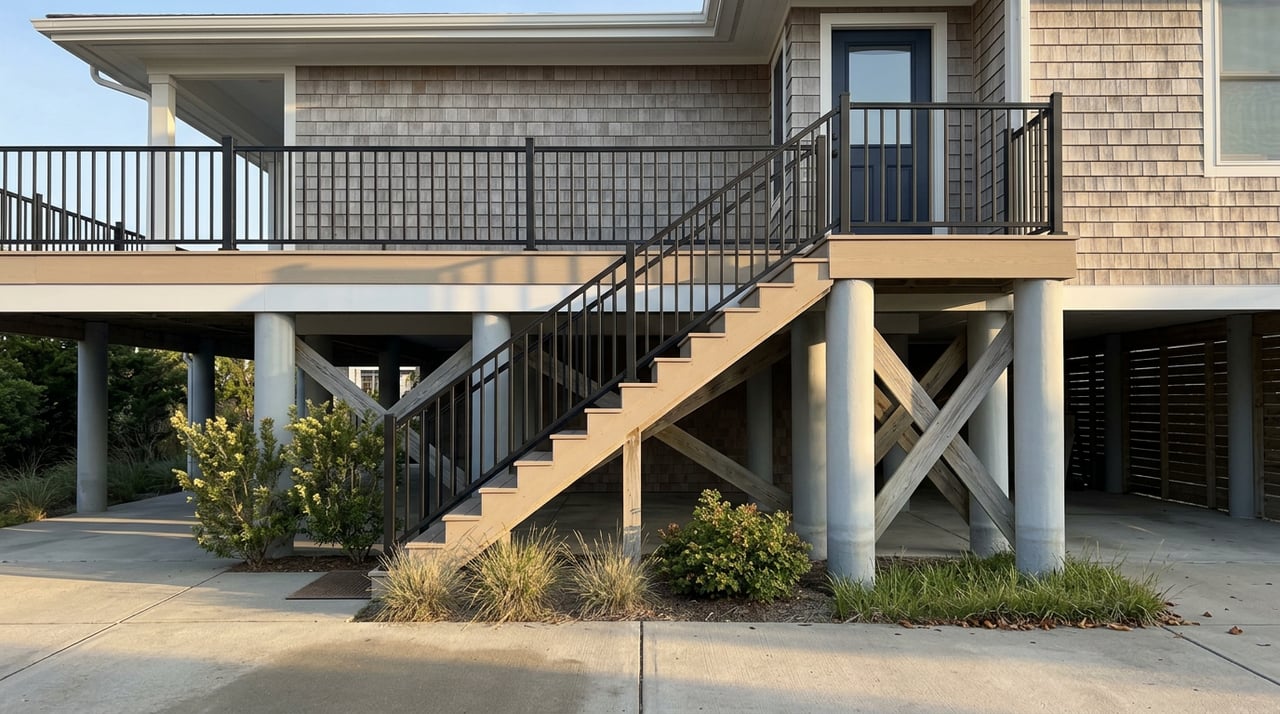
Stratford's New Flood Disclosure Law Isn't a Price Problem. It's a Timing Problem.
September 3, 2026
September 3, 2026
"In periods where the market is tight, it has less impact," appraiser Jonathan Miller told Insurance Journal in February, describing how Connecticut's new flood disclosure rules are likely to affect home values. He was talking about the state overall, but the line applies with unusual precision to Stratford's waterfront pockets, where homes in coastal neighborhoods like Lordship keep changing hands fast enough that a disclosed flood history rarely has time to sour a negotiation.
That timing detail is the story most sellers are missing. Connecticut's Public Act 25-33 took effect July 1, 2026, adding a formal flood history section to the paperwork every seller of a one-to-four family home in the state must provide. If you own in Lordship, Stratford Point, or along Short Beach Road, you have probably already heard some version of this law described as a threat to your sale price. The research does not support that read. What it supports is a narrower, more useful warning: the law does not slow down the market, but it does add a document-gathering step to a transaction that is already moving in a matter of weeks, not months. If you start pulling that paperwork after you have an accepted offer, you are the one adding delay to your own closing.
Public Act 25-33 modifies the Residential Property Condition Report. The report now includes a Flood Risk Awareness section, and sellers must answer six specific questions:
None of these questions require a new inspection or a new test. They require the seller to know the answers, in writing, before the report goes to a buyer. That distinction matters more in Stratford than it does in most of the state, because the town's geography puts a meaningful share of its housing stock inside the answer zone before the question is even asked.
The instinct with any new disclosure law is to assume it depresses value, because it forces sellers to put a risk in writing that buyers might otherwise overlook. Miller's point to Insurance Journal was that this effect is real but conditional. It shows up in soft markets, where buyers have leverage and time to negotiate around a disclosed risk. It mostly disappears in tight markets, where buyers do not have that leverage.
The two most recent read-outs on Stratford's coastal pocket tell a more interesting story than a simple price boom. Over the three months ending in May 2026, Lordship homes had a median sale price of $650,000, down a marginal 0.82 percent from the same period a year earlier, but the average time on market compressed to 38 days, down from 51 days the year before. Townwide, Stratford's median list price stood at $494,000 in August 2026, with homes spending a median of 26 days on the market, roughly the same pace as a year earlier. Read together, the signal is not runaway appreciation. It is compression: buyers are moving faster to secure homes even as prices level off, which is close to exactly the condition Miller described as blunting the price impact of new disclosure requirements. Sellers along Stratford's coast are not being punished for what they disclose. They are competing on how fast they can put a complete, defensible file in front of a buyer's attorney.
If price is not the vulnerability, timing is. Four of the six new disclosure questions ask for something a seller cannot answer from memory alone: an elevation certificate, a record of past FEMA assistance, a documented claims history, evidence of a prior water event. In a market moving at Stratford's current pace, there is no slack in the contract timeline to go find these documents after you have accepted an offer. A buyer's attorney reviewing the report during a standard due diligence period is not going to wait for you to request an elevation certificate survey. That request alone, from a licensed surveyor, can easily take several weeks, which may be longer than the 38 days a typical Lordship home now spends on the market before going under contract.
This is the actual mechanism worth understanding: the law makes flood history a formal part of the seller's disclosure. It changes when buyers learn it, and it puts the burden on the seller to have the answer ready at listing rather than negotiated in escrow. A seller who walks into a listing appointment already holding an elevation certificate, a clean claims history summary, and a current flood policy declaration page is negotiating from the same footing as before July 1. A seller who has to go find those documents mid-contract is negotiating from behind, in a market where buyers already have other options within a matter of weeks.
The financial exposure here is not abstract. According to DocJacket, Connecticut's existing property condition report law, separate from the new flood section, already entitles a buyer to a $500 credit at closing if the seller fails to furnish the report at all. The risk to a Stratford seller is not a collapsed sale price. It is a $500 credit if the seller fails to furnish the report at all, plus whatever delay comes from scrambling for paperwork inside a contract that both sides expected to move quickly.
There is a second, larger cost that shows up after closing rather than during it, and it applies whether or not a home ever changes hands. Stratford's coastal exposure along the Housatonic River and Long Island Sound means many owners in Lordship and Stratford Point already carry flood coverage, and the difference between a standard homeowners policy and a proper flood or windstorm endorsement can be the difference between a full payout and a partial one. A twenty-year-old roof damaged by wind, insured only under a standard actual cash value policy, might pay out roughly half of what a full replacement actually costs once depreciation is deducted. That gap has nothing to do with the new disclosure law, but it is exactly the kind of detail an elevation certificate and claims history conversation tends to surface, which is one more reason to have that conversation before listing rather than during it.
There is a mitigating detail worth knowing on the insurance side. According to Fludzone, Stratford participates in FEMA's Community Rating System and currently holds a Class 8 rating, which means policyholders in a Special Flood Hazard Area can receive up to a 10 percent discount on flood insurance premiums. Fairfield County's average annual NFIP premium runs around $1,472 as of August 2026. For a seller who can show a buyer that the home already carries a discounted, active policy, that is a point in the listing's favor, not against it, and it only works if you know that information before the question comes up.
For anyone in Lordship, Stratford Point, or along Short Beach thinking about a fall listing, the preparation gap is narrow and fixable:
None of this changes what your home is worth. It changes how smoothly a buyer moves from accepted offer to closing table, which in a market moving as fast as Stratford's is currently doing, is most of the negotiation that matters.
Does this law only apply to waterfront homes? No. Public Act 25-33 applies to sales of one-to-four family homes in Connecticut. It matters more in Lordship, Stratford Point, and Short Beach because a larger share of homes there sit inside a mapped flood zone, but the disclosure requirement itself is statewide.
What if I genuinely don't know whether my home has an elevation certificate? That is a common and answerable situation. A licensed surveyor can generate one, and it is worth doing before you list rather than after a buyer's attorney asks for it during due diligence.
Does the new law affect rentals in Stratford too? Yes. According to Flood Insurance Guru, landlords are required to provide a comparable flood disclosure notice to tenants at lease renewal, separate from the seller disclosure requirement.
If you are weighing a listing in Lordship, Stratford Point, or anywhere along Stratford's coastline this fall, the paperwork is worth sorting out before the sign goes in the yard, not after the first offer comes in. The Hill Team can walk through what your specific property's flood documentation looks like and what it is worth right now. Get a Free Home Valuation to start that conversation.
This article is general information, not legal, tax or financial advice. Consult a qualified professional about your situation.
Stay up to date on the latest real estate trends.






Choosing the right real estate team makes all the difference. We combine in-depth market knowledge, strategic marketing, skilled negotiation, and personalized service to ensure every client experiences a seamless and successful journey from consultation to closing. Your goals become our mission, and we work relentlessly to exceed expectations at every stage.