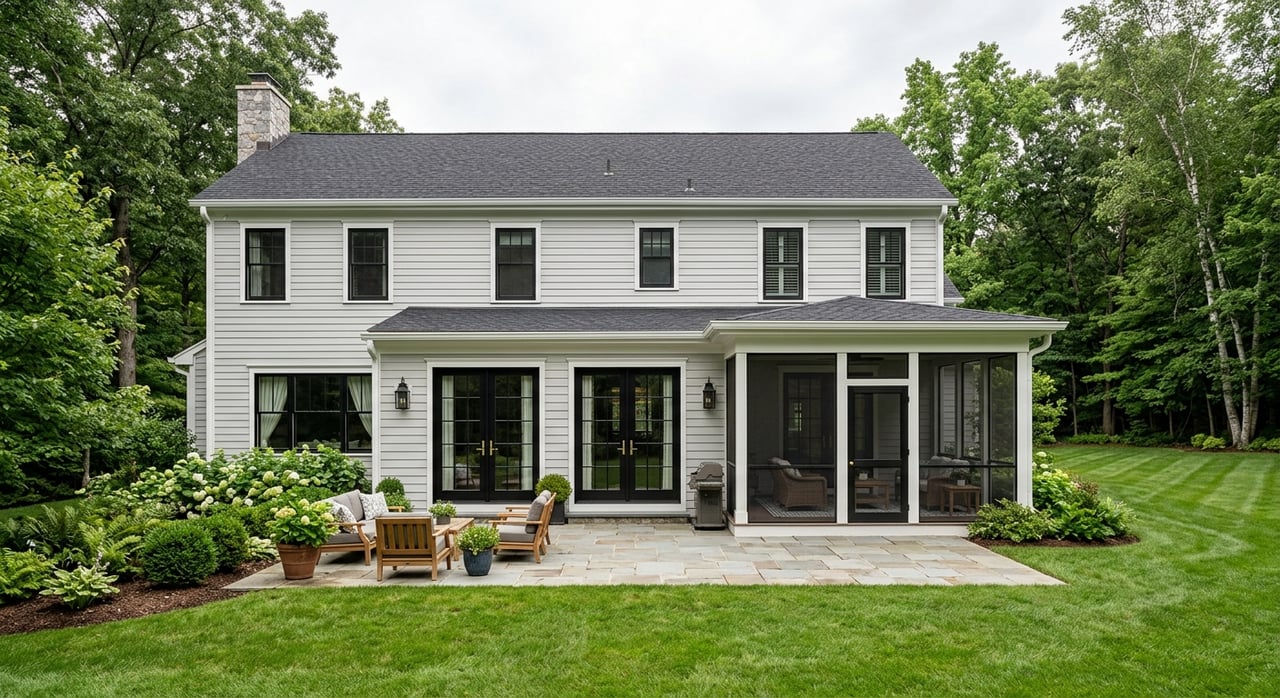
Orange CT Housing Market Trends Buyers and Sellers Should Know
June 18, 2026
June 18, 2026
Wondering whether Orange, CT is moving fast, slowing down, or simply getting harder to break into? If you are thinking about buying or selling here, it helps to know that Orange is not a high-volume market where broad headlines tell the full story. You need local context, realistic expectations, and a clear read on pricing, inventory, and timing. Let’s dive in.
Orange sits in a higher-priced, low-inventory part of south-central Connecticut. As of May 31, 2026, Zillow reported a typical home value of $640,992, up 1.5% year over year. Realtor.com’s April 2026 snapshot showed a $799,450 median listing price and a $710,000 median sold price.
Those numbers are not direct apples-to-apples comparisons. Zillow’s figure is a home-value estimate, while Realtor.com reports listing and closed-sale metrics. Still, both point to the same big picture: Orange is an expensive market with limited supply.
If you have been waiting for more options to hit the market, Orange may feel frustratingly small. Realtor.com reported just 19 active listings in April 2026, down 48.15% from a year earlier. Zillow also showed 19 homes for sale and 10 new listings as of May 31, 2026.
Because Orange has such a small number of listings, short-term changes can look dramatic. A handful of homes coming on or off the market can shift percentages quickly. That means it is smart to focus less on one-month swings and more on the overall trend of tight supply.
For buyers, that can mean fewer chances to compare homes side by side. For sellers, it can mean your home stands out more, especially if it is well-prepared and positioned correctly.
Orange remains primarily a single-family residential town. The town’s 2025 Plan of Conservation and Development says almost all of Orange is zoned single-family residential, with detached homes as the dominant pattern. The town’s 2026 revaluation page also notes residential property types that include single-family, condominium, and multi-family properties.
In plain terms, most buyers looking in Orange are shopping for detached homes, not a condo-heavy or dense housing market. That said, Orange is not limited to one product type. Condos and some other residential options do exist, even if they make up a smaller share of the market.
This matters because entry-level segments can still be especially competitive. Realtor.com notes that starter homes and condos may see some of the strongest demand, which is important if you are a first-time buyer or looking for a lower entry point.
One of the most interesting Orange data points right now is the market pace. Realtor.com reported 66 median days on market in April 2026. That is slower than some nearby towns, but it does not necessarily mean the market is weak.
At the same time, homes were selling for 101% of asking price. That combination tells you something important: buyers are still willing to pay strong prices for the right home, but not every listing is moving quickly. In a market like this, pricing strategy and presentation matter a lot.
Recent sold examples from Redfin show a wide range of outcomes. Some homes sold in roughly 40 to 50 days and closed above list price, while one higher-end home took 262 days and sold below list. That spread suggests buyers are paying close attention to condition, updates, lot appeal, and whether the asking price feels justified.
If you are buying in Orange, preparation matters more than panic. With only 19 active listings, opportunities can be limited. But with a 66-day median market time, you may have a little more breathing room than you would in a market where everything disappears in a week.
That does not mean you can be casual. A strong, well-supported offer still matters in a town where homes are selling at 101% of asking price on average. But it does mean you can stay focused on fit, condition, and long-term value instead of feeling forced into a rushed decision every time a home appears.
A few practical buyer takeaways:
If you are relocating from another market, Orange can feel more suburban and detached-home oriented than some nearby alternatives. That can be a plus if your priority is more space and a traditional residential setting.
If you are selling in Orange, this is not a market where you can rely on old assumptions. The gap between a $799,450 median list price, a $710,000 median sold price, and Zillow’s $640,992 typical home value shows why broad numbers only go so far. Local comp interpretation matters.
Buyers are still paying strong prices for homes that are priced well and presented well. But Orange’s slower market pace means the cost of overpricing can be higher than in a faster-turnover town. A home that misses the market on price may sit longer, which can weaken momentum.
For sellers, the smartest strategy is usually to:
In a tight-inventory market, you still want to stand out for the right reasons. A smaller supply does not automatically guarantee a quick sale at any price.
If you are choosing between Orange and nearby towns, the differences are meaningful.
Milford offers more inventory and more variety. Realtor.com’s April 2026 snapshot showed 168 homes for sale, a $589,500 median listing price, a $423,500 median sold price, and 28 median days on market. It also includes a broader mix of homes, condos, and new construction options.
Compared with Milford, Orange is generally more supply-constrained, more detached-home oriented, and higher priced. If you want more choices and a broader range of product types, Milford may feel more flexible. If you want a more suburban, house-focused market, Orange may better match your goals.
West Haven comes in at a lower price point and has stronger transit-oriented appeal. Realtor.com reported 132 homes for sale, a $350,000 median listing price, and 34 median days on market. The city also notes access to I-95, Route 15, Route 1, and a Metro-North station within walking distance of downtown.
Compared with West Haven, Orange is typically higher priced, less transit-centered, and more suburban in housing character. Buyers who want a lower entry price or easier rail access may lean toward West Haven. Buyers who want more detached-home inventory and a suburban setting may find Orange more appealing.
Orange fits into the same broader south-central Connecticut corridor as Milford and West Haven, but it offers a different feel. The town’s planning documents note that I-95 crosses the southeast corner, Route 15 runs through the east side, and Route 1 connects Orange to Milford, West Haven, and New Haven.
That makes Orange a practical option if you want suburban space while staying connected to the shoreline job corridor and regional travel routes. It is not as rail-oriented as West Haven or as shoreline-centered as Milford, but it remains well-positioned for many day-to-day commuting patterns.
Orange is best understood as a suburban, largely single-family market with high price points, limited inventory, and a slower but still competitive pace. Buyers can benefit from a little more time to evaluate homes, but they still need to be ready when the right one appears. Sellers can benefit from low supply, but only if pricing and presentation are handled with care.
If you are weighing Orange against Milford, West Haven, or another nearby town, the right choice often comes down to your budget, preferred housing type, and how much flexibility you want in your search. If you want help reading the numbers through a local lens, The Hill Team is here to guide you with clear communication, strong advocacy, and practical next steps.
Stay up to date on the latest real estate trends.
Choosing the right real estate team makes all the difference. We combine in-depth market knowledge, strategic marketing, skilled negotiation, and personalized service to ensure every client experiences a seamless and successful journey from consultation to closing. Your goals become our mission, and we work relentlessly to exceed expectations at every stage.